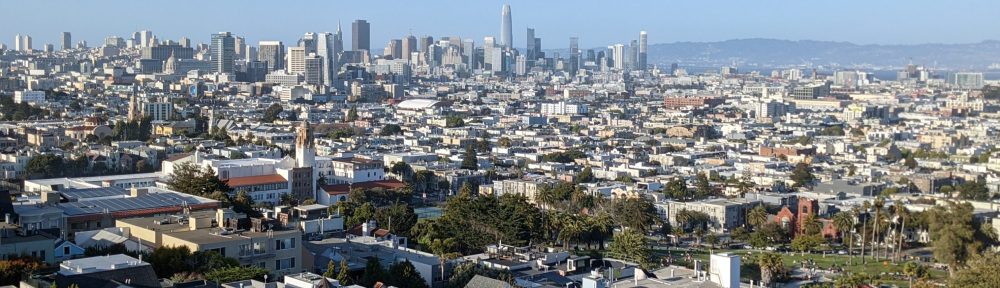
San Francisco Planning has nearly completed its years-long project to meet the quota of 82,000 new housing units imposed on us by the State. (For more information read this primer from SF Planning.) The City’s response is to upzone nearly two-thirds of the City’s residential lots – from Glen Park/Noe Valley to the northeast/northside and all the areas west of Twin Peaks. (See this interactive map with the Lurie Administration’s “Family Zoning Plan” proposed heights.) This blanket upzoning plan includes “waivers” of key planning code requirements – such as current rear yard setbacks and added height bonuses for some blocks and for corner and large properties.
How does this affect Dolores Heights? The table on the DHIC website summarizes the key changes that can be incorporated into new housing projects in our neighborhood. Say hello to 65 foot buildings on corners and to adjacent buildings that extend 20 feet past your home’s rear wall.
DHIC opposes this strategy to upzone hundreds of thousands of lots to meet SF’s goal of only 36,200 additional projects by 2032. And 80% of these projects must be affordable housing (see the primer linked above); however, inclusionary units and subsidies fall short of meeting this goal.
What’s next? On June 24 Mayor Lurie introduced legislation amending the Planning Code rules to incorporate the provisions of the Family Zoning Plan. It will be heard at the Board of Supervisors during the summer and likely voted on in early Fall.
Upzoning: Impact on Dolores Heights 6/24/2025
Incentivizes significantly taller/longer buildings with negative impacts on open space and public views
| Zoning Element | DH SUD – the way it’s been since 1980 | Proposed Upzoning – the way it will be for multi-unit projects |
| Height | 35 feet height throughout the Dolores Heights Special Use District (DH SUD) | 40 feet – 65 feet heights – see SF Planning map for heights by street, plus up to 50’ on blocks east of Sanchez and north of 20th St.More changes – height, length, etc. below |
| Impact: taller buildings – 40 feet up to 65 feet, and 50 feet on some blocks – will cast more shadows on nearby homes, reduce public views, and degrade the view of Sanchez Hill. See proposed map | ||
| Rear yard setback | 45% of lot depth For a standard Dolores Heights lot (114’ deep), required rear yard: 51 feet | Reduce current setback by 18% of lot depth: For a lot depth of 114 feet, required rear yard reduced to: 30.5 feet, |
| Impact: buildings can extend 20 feet further into the rear yard than the adjacent homes – reducing neighbors’ light, privacy, & the midblock open space in Dolores Heights. | ||
| Additional height allowed | None | Corner lots and lots > 8000 sq feet can add two stories, up to 65 feet height. 50 feet allowed on lots east of Sanchez and north of 20th. |
| Impact: Regardless of “base height”, properties on a corner or on a 8000 sf lot anywhere in Dolores Heights can build to 65 feet height – casting shadows and blocking public views up & down Sanchez Hill | ||
| Project review | Hearings for variances and some demolitions | “Ministerial” review: in many cases, no appeal rights or hearing if project meets standards |
| Impact: New buildings can be approved with no notice to neighbors or hearing to assess impact on neighbors or the neighborhood. | ||
What can we do? DHIC is part of Neighborhoods United SF (NUSF.net ) which opposes the plan and advocates for alternative strategies. You can write or call the Mayor to express your views on the plan.
 Dolores Heights Improvement Club